

The research conducted with the contribution of Burdur Mehmet Akif Ersoy University showed that augmented reality used in conjunction with exploration and design activities can support preschool children's science learning.
The study, carried out in two kindergartens in the Gölhisar district of Burdur, involved 69 children aged 5–6 years. In the eight-week study, the learning outcomes of children following the existing curriculum were compared with those participating in activities that combined science, technology, engineering, art, and mathematics. In one group, these activities were enriched with augmented reality applications.
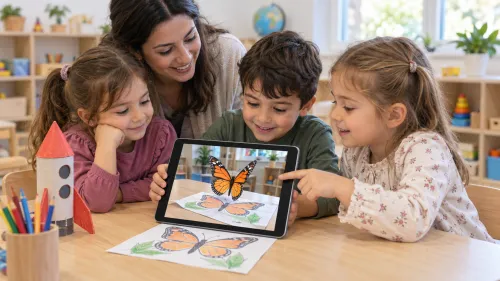
Children designed vehicle models, examined living things, and sought solutions to questions related to daily life during the activities. In the group using augmented reality, planets were examined in three dimensions, and the butterflies painted by the children were transformed into animated models on the tablet screen. Tablets were used in small groups in turn to support collaborative learning.
At the end of the research, higher learning outcomes were achieved in both groups where exploration and production-based activities were applied compared to the group following the existing program. The group supported by augmented reality achieved the highest score in the overall evaluation. This group's superiority was maintained in measurements taken two weeks later. The support of augmented reality stood out particularly in preserving scientific inquiry skills such as observation, comparison, and prediction.
Evaluations from teachers and families also indicated positive changes in children's curiosity, participation in activities, and interest in science topics.
The findings highlight the value of integrating technology with age-appropriate exploration and production activities under teacher guidance. More comprehensive follow-up studies are needed to understand whether this contribution is maintained over a longer period.
The research was published in the School Science and Mathematics journal.
The DOI link of the article: https://doi.org/10.1111/ssm.70045